

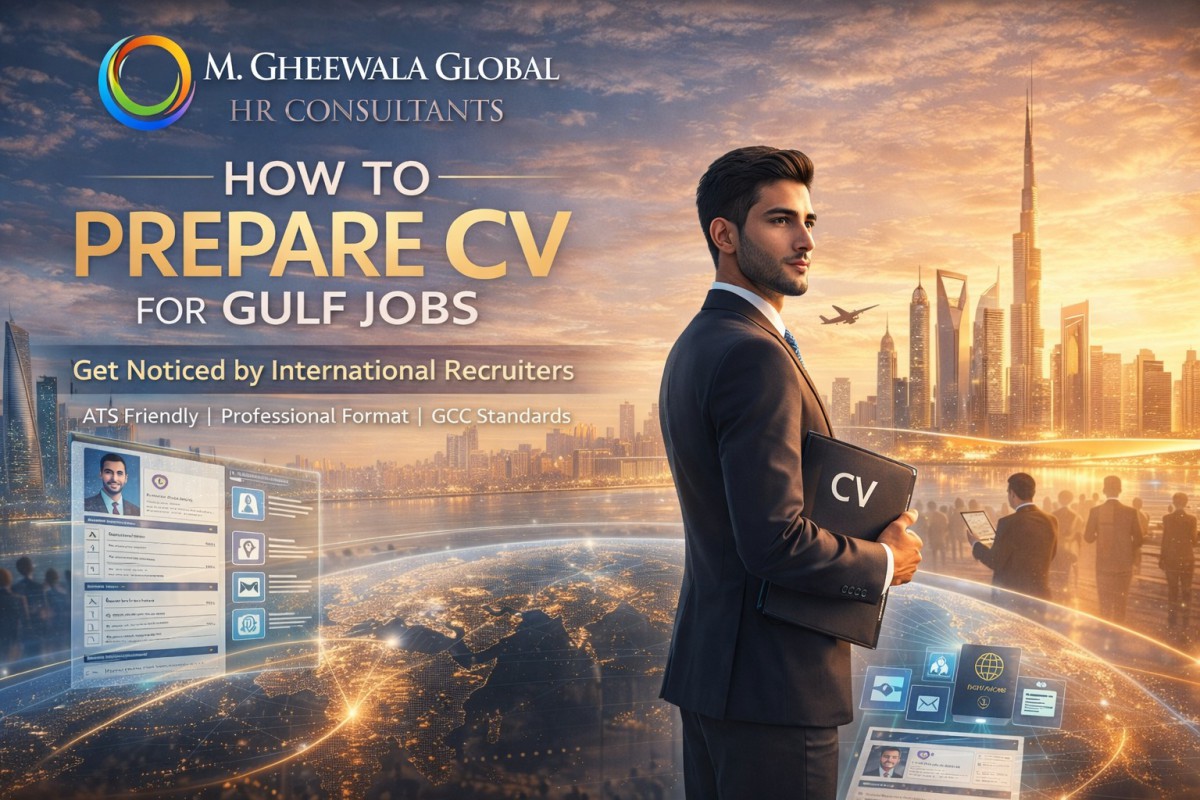
How to Prepare a CV for Gulf Jobs (Step-by-Step Guide – 2026)
Introduction
If you’re planning to work in countries like the UAE, Saudi Arabia, Qatar, or Oman, your CV needs to match Gulf hiring standards. Many candidates apply with a standard resume and don’t get shortlisted, not because they lack skills, but because their resume isn't presented the right way.
In the Gulf job market, recruiters receive hundreds of applications for a single role. So your CV should be clear, well-structured, and easy to scan within a few seconds.
Why Gulf CV Format is Different
A CV for Gulf jobs is slightly different from what we usually use in India. Recruiters here focus first on your eligibility and certifications before going into details.
For example, mentioning your nationality, passport status, and availability is very important. Also, adding a professional photo is a common practice in most Gulf countries.
Another key difference is that employers expect to see actual results in your experience, not just responsibilities.
Step 1: Start with a Clear Header
Your header should give all important information at a glance.
Include your full name, job title, nationality, and current location. Below that, add your phone number, email, and LinkedIn profile if you have one.
You should also mention:
- Passport or visa status
- Availability (immediate or notice period)
- Languages you can speak
This helps recruiters quickly understand if you are suitable for the role.
Step 2: Write a Strong Professional Summary
This is a short introduction about you, usually 3 to 4 lines.
Instead of writing general lines, try to highlight your experience, skills, and one or two achievements.
For example, if you are an electrical technician, you can mention your years of experience, the type of industry you worked in, and any improvements you achieved in your work.
Keep it simple and direct; no need to use complicated words.
Step 3: Add a Skills Section
Your skills section should be easy to read. You can divide it into two parts:
- Technical skills
- Certifications
Mention the tools, systems, or machines you have worked on. If you have safety certifications like NEBOSH, OSHA, or IOSH, make sure they are clearly visible.
This section helps recruiters quickly match your profile with the job requirements.
Step 4: Show Your Experience with Results
This is the most important part of your CV.
Write your experience in reverse order (latest job first). For each role, don’t just list what you did, show what you achieved.
For example:
Instead of writing “Handled maintenance work,” you can say,
“Reduced equipment breakdown by improving maintenance schedule.”
If possible, add numbers. Even small improvements make a big difference.
Step 5: Mention Education and Certifications
Clearly mention your qualification, whether it’s a diploma, ITI, or degree.
Also include all relevant certifications, especially safety-related ones. In Gulf jobs, certifications like NEBOSH or OSHA are often preferred or required.
Keep this section simple and easy to verify.
Step 6: Keep the Format Clean and Simple
Avoid using too many designs or colors. A simple and clean CV works best.
Use a standard font like Arial or Calibri. Keep the size readable and maintain proper spacing.
Also, try to keep your CV within 2 pages. Recruiters usually don’t spend much time on long CVs.
Step 7: Use Relevant Keywords
When applying online, your CV is often scanned by systems before a recruiter sees it.
So it’s important to include words related to your job role and industry. You can take these from the job description itself.
Just make sure they fit naturally into your CV. Don’t overdo it.
Step 8: Final Check Before Applying
Before sending your CV, take a few minutes to review everything.
Check for spelling mistakes, correct contact details, and proper formatting. Also, make sure your CV matches the job you are applying for.
Sending the same CV everywhere is not always effective. Small changes can improve your chances.
Step 9: Where to Apply
There are several trusted job portals for Gulf jobs where you can upload your CV and apply directly.
Make sure your profile is complete and updated regularly. This increases your visibility to recruiters.
Step 10: Mistakes to Avoid
Many candidates make simple mistakes that reduce their chances.
Avoid:
- Making your CV too long
- Writing only duties without results
- Skipping important certifications
- Using unprofessional email IDs
- Sending the same CV for every job
Also, always send your CV in PDF format unless asked otherwise.
Conclusion
Preparing a CV for Gulf jobs is not difficult, but it does require the right approach.
If your CV is clear, properly structured, and shows your actual work results, you already have a strong chance of getting shortlisted.
Take your time to build it properly, and you’ll start seeing better responses from employers.
Follow M. Gheewala Global HR Consultants for Latest Vacancies